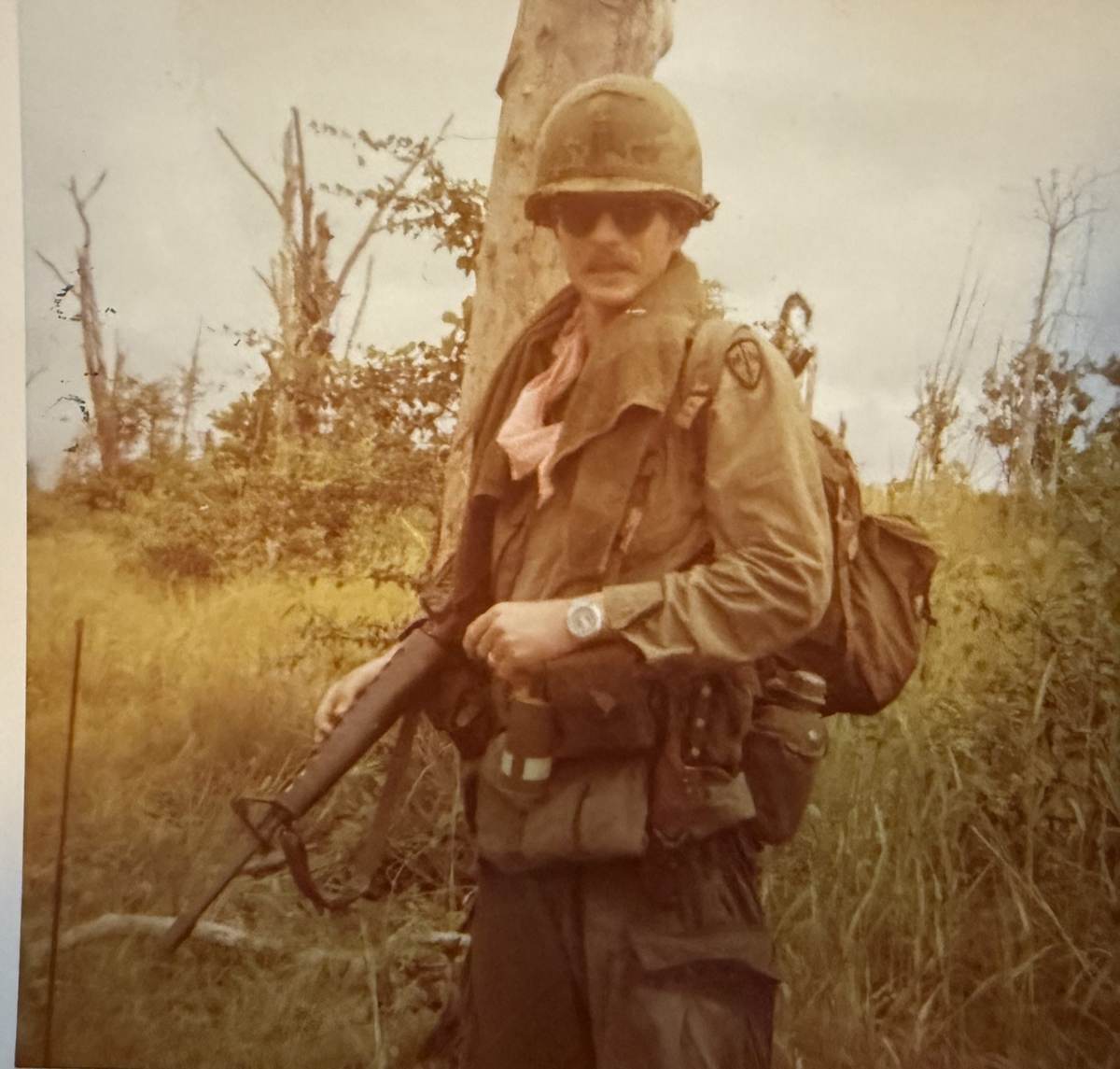
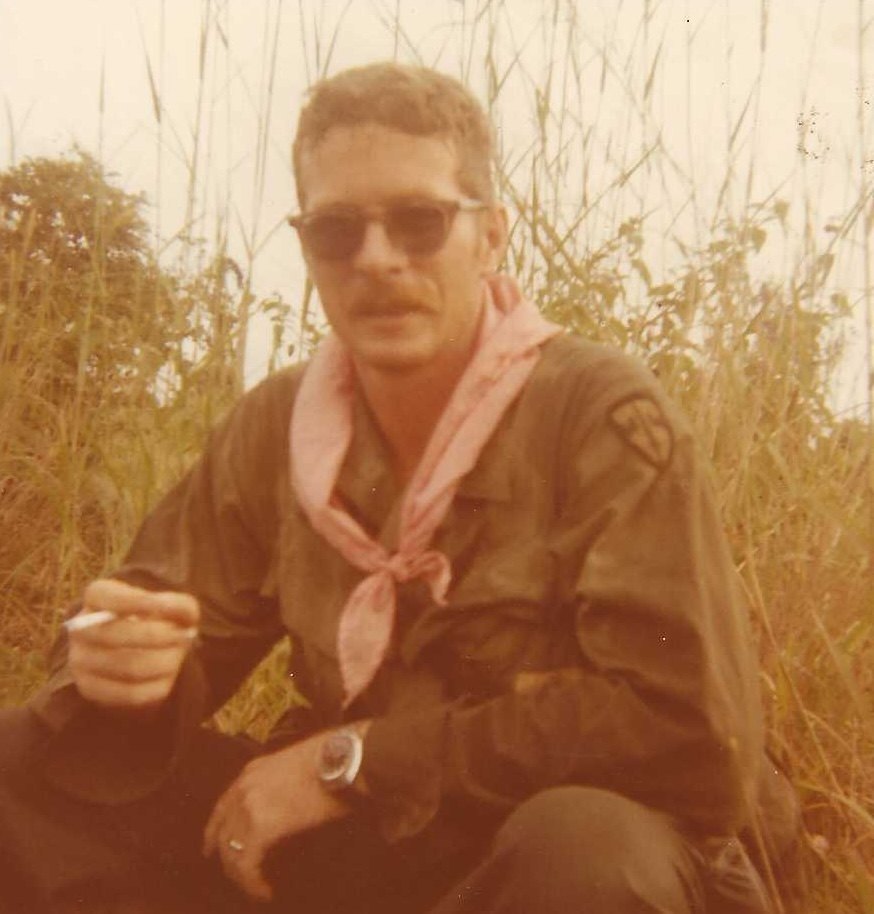
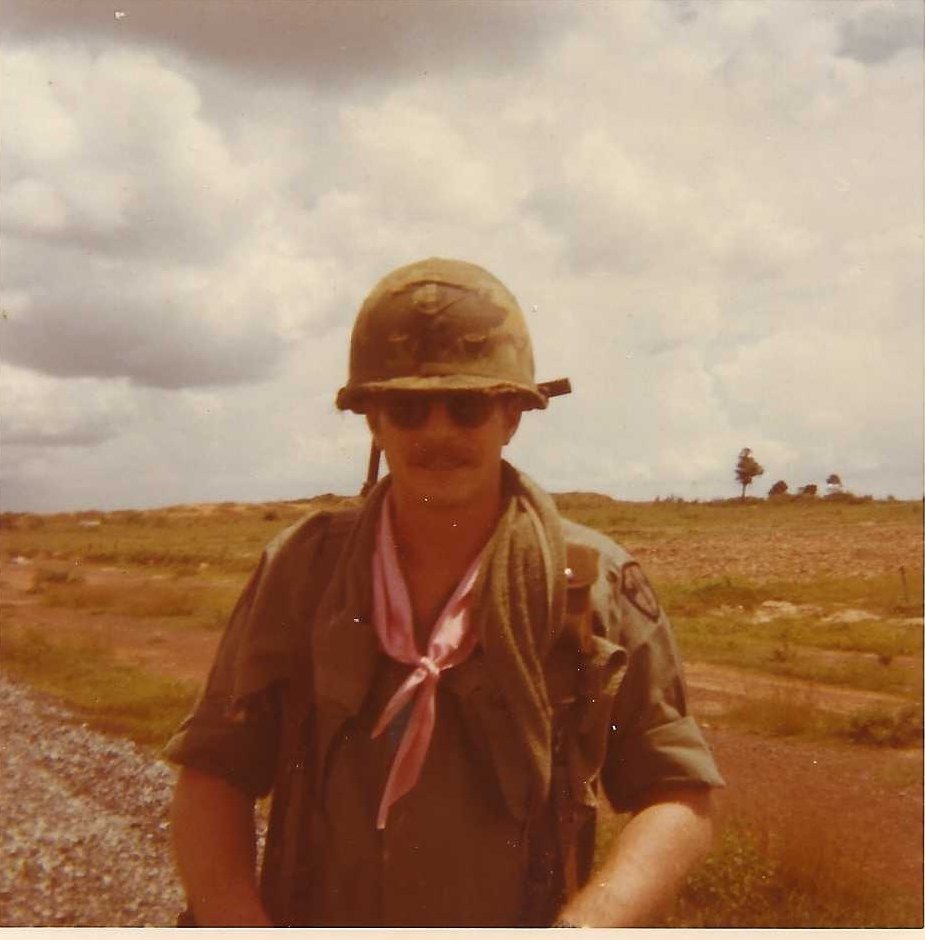
Later on that same tour, after the Air Cav missions, my father served on the ground as a U.S. Army forward observer and advisor with the South Vietnamese soldiers of the ARVN 5th Infantry Division. Those months brought the closest alliances, the greatest risks, and the lasting bonds of his war.
His second tour is where he earned his Combat Infantryman Badge, fighting side by side with the South Vietnamese soldiers he advised. He also flew with Air Cav units, coordinating strikes in support of the ARVN 8th Infantry Regiment, Special Forces teams, and MACV-SOG operators, with fast-moving Huey gunships firing rockets and making machine-gun strafing runs. As part of MACV, he earned the respect of his own men and of the men he supported.
Advisory Team 70 and the 5th Division
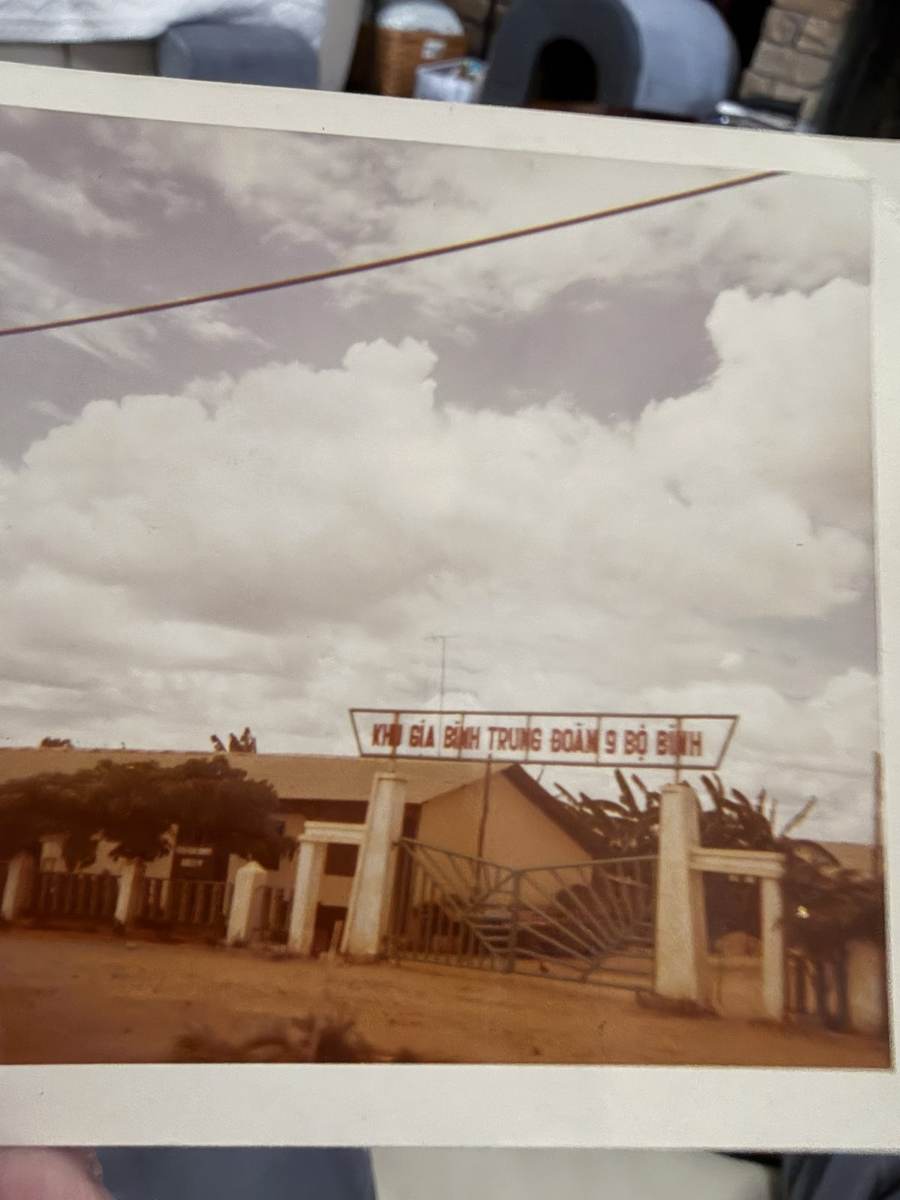
My father was assigned to Advisory Team 70, the MACV team that advised the ARVN 5th Infantry Division. The 5th Division operated north of Saigon, in the area the U.S. 1st Infantry Division had held until it went home in 1970, the same ground where he had fought on his first tour. Its infantry regiments were the 7th, 8th, and 9th. My father was the American advisor to the 4th Battalion of the 8th Regiment.
The division had a hard year in 1971. From February to June it took part in Operation Toan Thang 1/71, the South Vietnamese push into Cambodia along Highway 7. In late May, at Snuol, three North Vietnamese regiments trapped a 5th Division task force as it was being withdrawn, and it broke and retreated with heavy losses. A new division commander, Col. Lê Văn Hưng, had taken over that April. The fighting my father’s papers describe, in August and October 1971, came in the months after Snuol, as the division rebuilt.
An advisor lived with his Vietnamese unit, went on its operations, and was the link to American firepower. My father’s experience as a forward observer and his months flying with Air Cav made him useful in that job. He coordinated artillery, marked enemy positions, called in helicopter gunships and air strikes, and passed along intelligence. As on his first tour, he was on the front line, engaging the enemy alongside the soldiers he advised, and the South Vietnamese military decorated him for it.
Earning the Pink Scarf
In the photographs he brought home from his second tour, my father is wearing a pink scarf. The South Vietnamese soldiers he served with gave it to him as a sign of respect for an American advisor who had lived and fought side by side with them. It meant they trusted him as one of their own.
Fighting Beside the ARVN
The South Vietnamese soldiers did not trust outsiders easily. Their war was harder and less supported than the American effort. They were fighting for their homes and families on their own ground, and they watched their country’s politics fracture while the war went on. They took my father in and fought beside him in firefights that Americans at home never heard about.
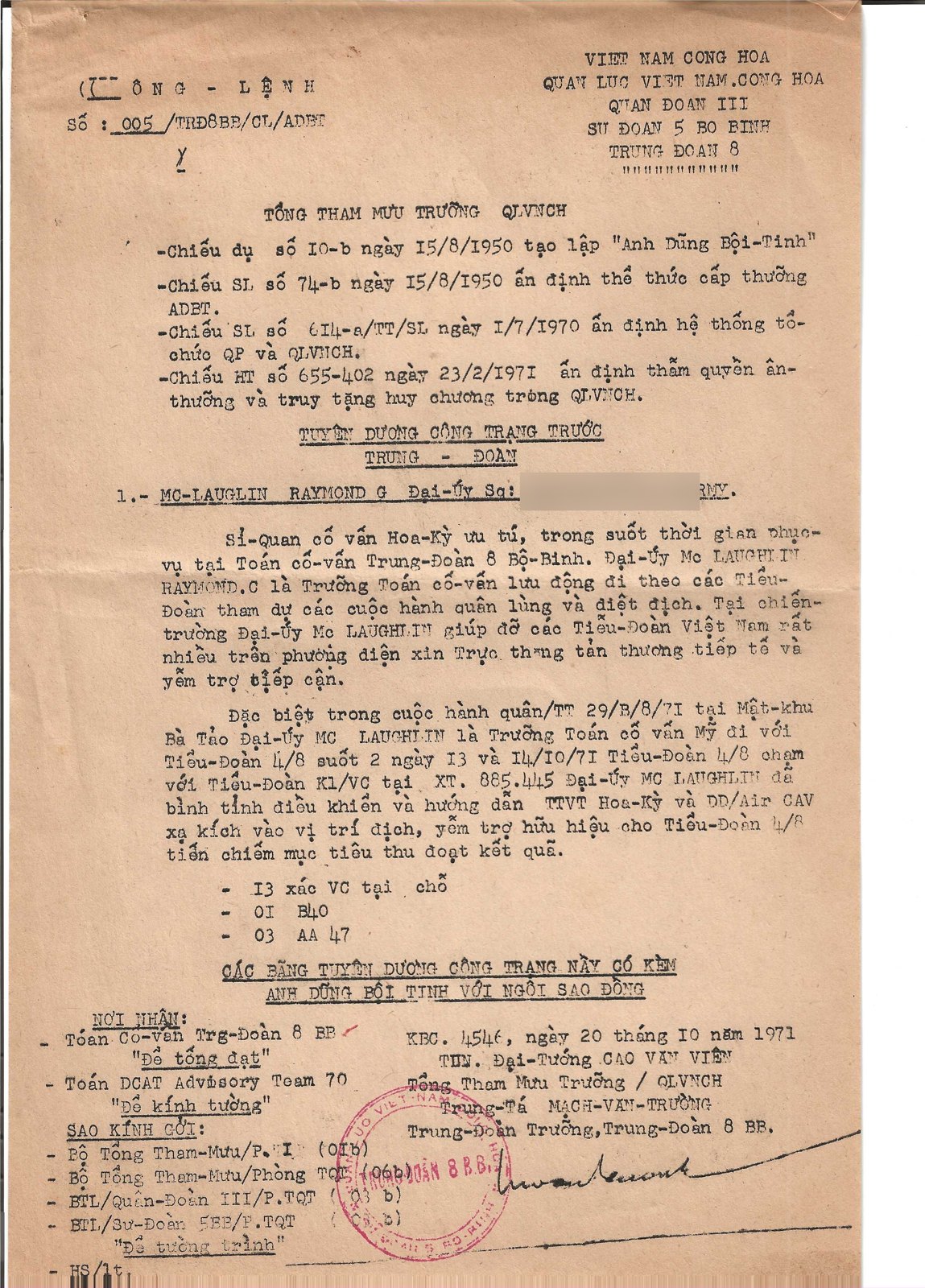
A commendation sent to my father’s command by the regiment he advised, translated from the Vietnamese, reads:
McLAUGHLIN, Raymond G., Captain, U.S. Army. As the American advisor to the 8th Regiment, Captain McLaughlin has, throughout his assignment, demonstrated excellent cooperation with the Vietnamese officers and soldiers of the Regiment. He has also participated in many operations conducted by the Regiment.
During the Toan-Thang operation on 29 August 1971 in the Ba-Tao area, and during two days (13-14 October 1971) when the 1/8 Battalion engaged the K.1 Viet Cong Battalion, Captain McLaughlin, serving as advisor to the 4/8 Battalion, remained calm under heavy enemy fire, directly engaged the enemy, and directed U.S. helicopter units and Air Cav forces to provide timely and effective support. Thirteen Viet Cong were killed on the spot; one B-40 rocket launcher, three AK-47 rifles, and many important documents were captured.
This commendation is submitted to the Regiment for appropriate recognition. Dated 20 October 1971. Signed: Lt. Col. Mạch Văn Trường, Commander, 8th Infantry Regiment.
An Artilleryman’s Combat Infantryman Badge
The Combat Infantryman Badge is the Army’s mark of a soldier who has fought as an infantryman on the ground. It is reserved, almost without exception, for soldiers whose branch is infantry or Special Forces and who are assigned to an infantry unit while it is engaged in ground combat. My father was an artillery officer. Artillerymen normally do not qualify, not even forward observers who live and move with the infantry every day.
Vietnam produced one of the few exceptions. Because American advisors lived and fought inside South Vietnamese units, the Army opened the badge, from March 1961 on, to soldiers of other branches who were officially assigned as tactical advisors to South Vietnamese infantry, ranger, or comparable infantry-type forces. They still had to be personally present and under fire while performing advisory duties in ground combat. Belonging to an advisory organization was not enough; the duty assignment was what counted.
That is how my father came to wear it. His DD-214 lists the Combat Infantryman Badge among his awards. He earned it on his second tour as an artillery captain on Advisory Team 70, assigned as advisor to the 4/8 Battalion of the ARVN 8th Infantry Regiment, under fire with the soldiers he advised. The same fighting earned him the Vietnam Gallantry Cross. For the Toan-Thang operation in the Ba-Tao area on 29 August 1971, and for 13 and 14 October 1971, when the 1/8 Battalion engaged the K.1 Viet Cong Battalion, the regiment’s commendation says that, as advisor to the 4/8 Battalion, he “remained calm under heavy enemy fire, directly engaged the enemy,” and brought in American helicopters and Air Cav support, fighting shoulder to shoulder with the Vietnamese soldiers he served with. Six days after the October battles, on 20 October 1971, the regiment awarded him the Gallantry Cross “for the courage he displayed under enemy fire.”
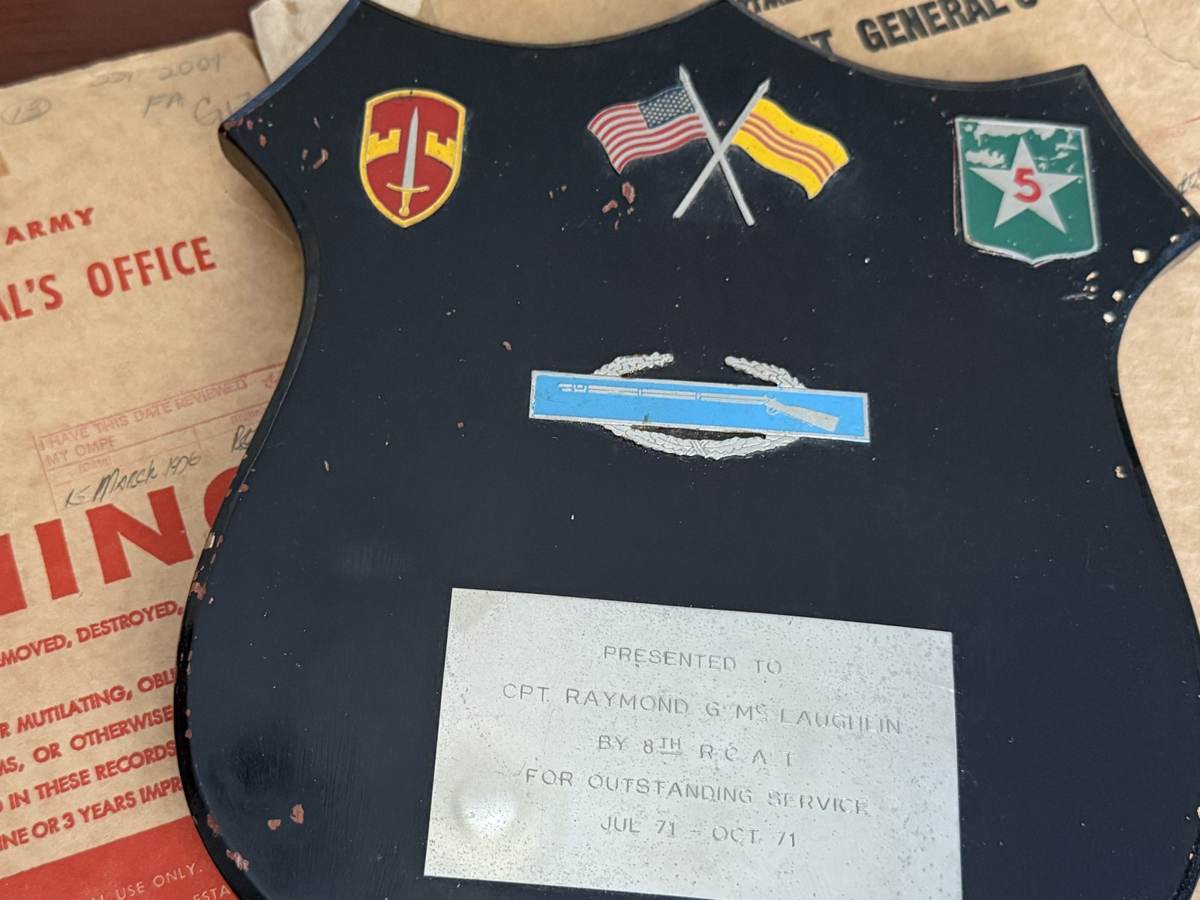
Few artillery officers earned the right to wear the Combat Infantryman Badge. It sits at the top of the plaque the 8th Regimental Combat Advisory Team gave him and across the top of his framed medals.
The Vietnam Gallantry Cross
The Anh-Dũng Bội-Tinh, the Gallantry Cross, was awarded by the Republic of Vietnam for bravery in combat against enemy forces. It was one of the highest South Vietnamese awards for heroism and was usually presented for actions under direct enemy fire.
The certificate in my father’s papers was issued by the Commander of the 8th Infantry Regiment to “McLaughlin, Raymond G., Captain, Advisory Team 70,” and reads, in Vietnamese: Về lòng dũng-cảm mà đương-sự đã biểu-lộ trước hỏa-lực của đối-phương, which translates as “For the courage he displayed under enemy fire.” It is dated 20 October 1971 and signed by the Regimental Commander.
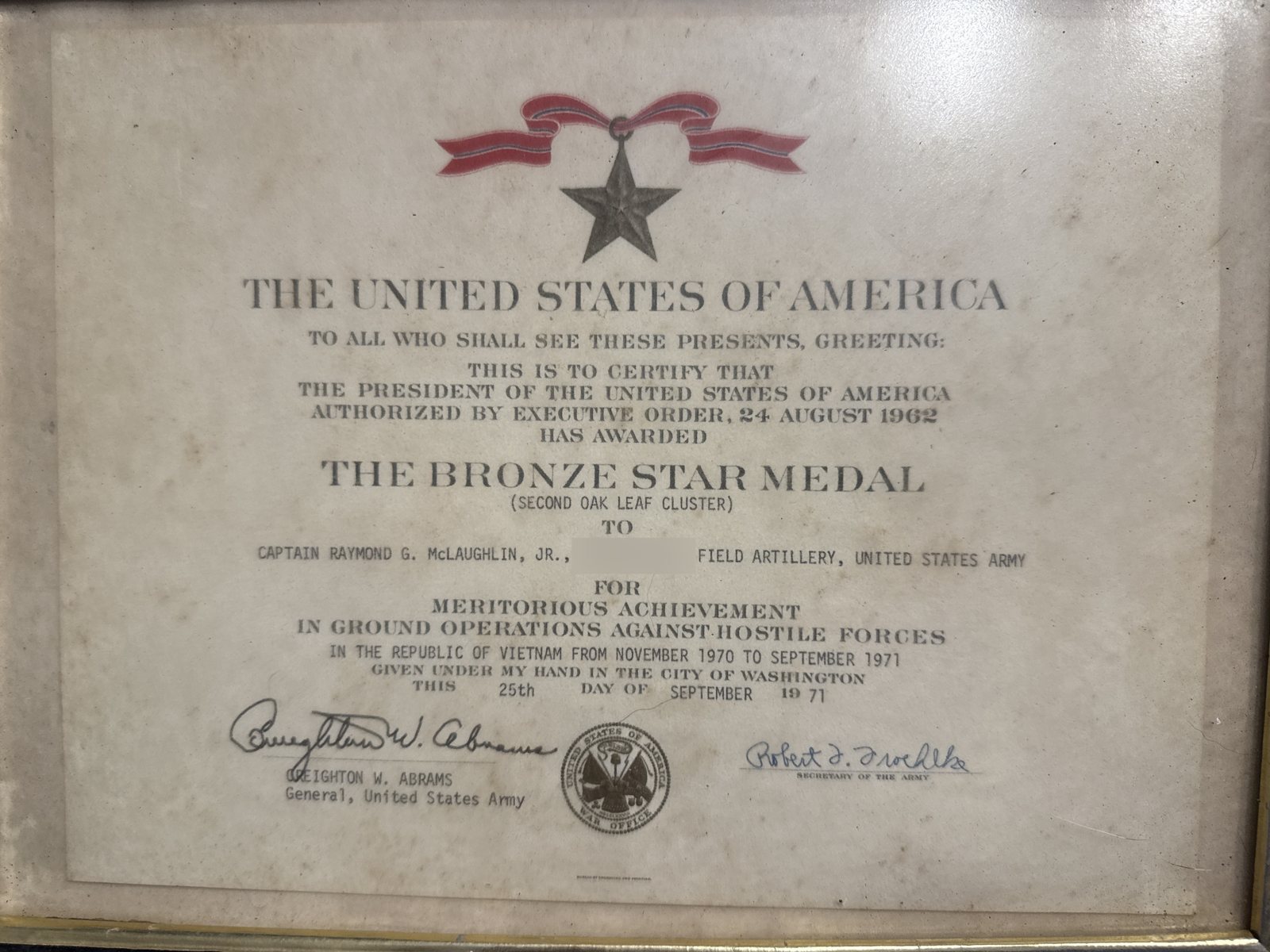
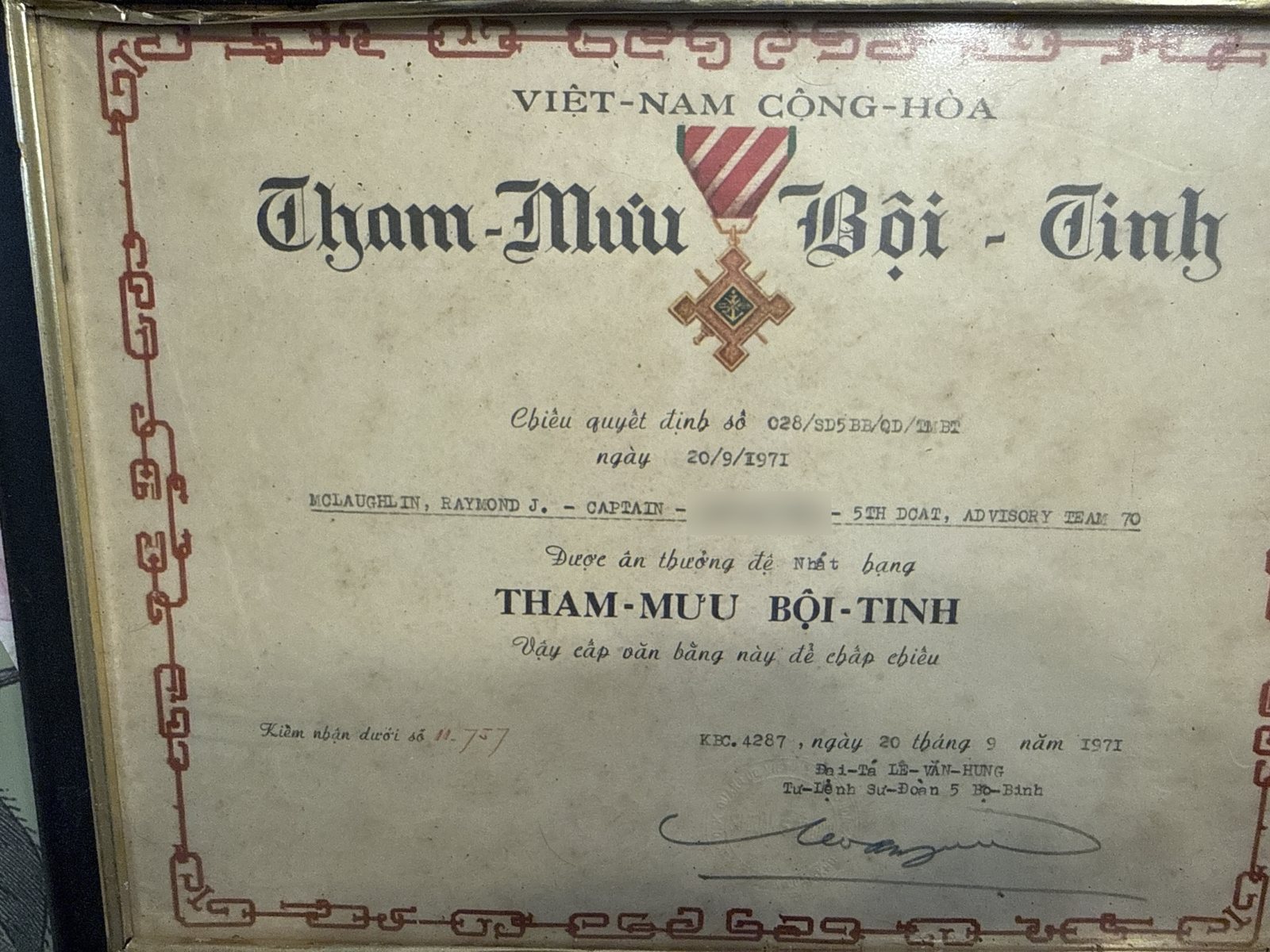
His DD-214 lists two Vietnamese Crosses of Gallantry, one with Palm and one with Bronze Star, along with the Republic of Vietnam Honor Medal and the Vietnamese Staff Service Medal, First Class. The Gallantry Cross above is the one whose certificate survived in his papers. He kept it with everything else.